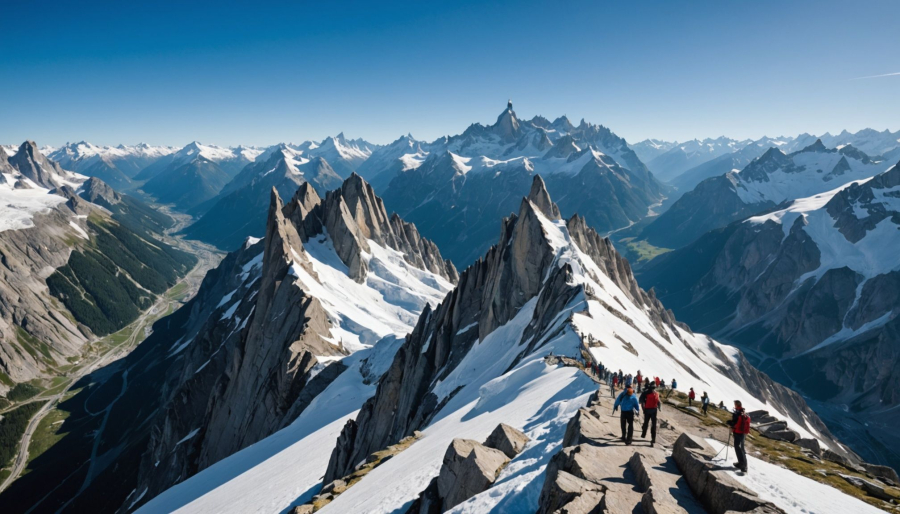
A cold gust of air hits your face the moment the cable car doors slide open at 3,842 meters. The silence is thick, almost reverent, broken only by the crunch of boots on frost-laden rock. Below, the Mont-Blanc massif sprawls in all its jagged glory - a frozen kingdom where sky meets stone. It’s not just a view. It’s a feeling: small, humbled, yet utterly alive. This is why people come, season after season, to stand at the edge of the sky.
The thrill of the Aiguille du Midi cable car ascent
A vertical journey from the valley floor
The ascent begins in the heart of Chamonix, a town nestled between steep alpine walls and sky-piercing peaks. In just 20 minutes, the cable car climbs from 1,035 meters to the summit station perched at 3,842 meters. The incline is dramatic - one of the steepest in Europe - and the transformation outside the window is nothing short of cinematic. Lush green meadows give way to barren rock, then snowfields that glisten year-round. The cabins glide over valleys so deep they seem bottomless, offering a preview of the scale you're about to experience.
Arriving prepared makes all the difference. Many travelers looking for a seamless journey often book a Lyon to ski resorts transfer to reach the valley before heading up the mountain. These pre-arranged services eliminate the stress of navigation, parking, or last-minute changes, especially when weather shifts quickly in high terrain. Starting your day with a reliable connection means arriving calm, focused, and ready for what’s ahead.
Safety and local expertise at high altitude
While the cable car is operated with military precision, the surrounding environment is anything but predictable. Local knowledge matters - from knowing the best time to arrive to understanding how altitude affects different passengers. The companies that have served this valley for decades understand not just the routes, but the rhythm of the mountains. They know when fog rolls in, how wind impacts access, and why timing is everything.
Booking with a trusted provider means more than just a ride - it’s peace of mind. Whether you're arriving from Lyon or another regional hub, choosing a service familiar with alpine logistics ensures you reach the base station without delays. This is seamless travel logistics in practice: no missed connections, no last-minute scrambling, just a smooth transition from road to sky.
Comparing the summits: What to see at 3,842m
The Step into the Void experience
One of the most talked-about moments at the summit is stepping into the glass box suspended over a 1,000-meter drop. The "Step into the Void" attraction is not for the faint of heart. As you walk out on transparent panels, the void beneath your feet creates a surreal sensation - as if floating above the world. The panoramic views stretch across France, Italy, and Switzerland, with glaciers winding through canyons like frozen rivers.
Photographers flock here at sunrise, when the first light hits the peaks in golden waves. But even on cloudy days, the atmosphere remains powerful. This isn’t just sightseeing - it’s immersion in a landscape that feels untouched by time.
The Central Piton and Mont-Blanc views
The main terrace, anchored at the Central Piton, offers a full 360-degree panorama. On clear days, you can spot the summit of Mont-Blanc itself, just across the glacier. Other landmarks include the Grandes Jorasses, the Aiguille Verte, and the icy spine of the Vallée Blanche. Inside the summit building, a small museum provides context - historical photos, geological insights, and real-time weather data from the mountain’s weather station, one of the highest in Europe.
| Zone Name | Key Attraction | Altitude / Access | Main Viewpoint |
|---|---|---|---|
| Piton Nord | Historic summit station | 3,777m - accessible via guided tour | North face of Mont-Blanc |
| Piton Central | Main summit building, café, museum | 3,842m - reached by cable car | 360° alpine panorama |
| Espace Mont-Blanc | Step into the Void, viewing platforms | 3,842m - same level as Central Piton | Vertical drop views, Italian Alps |
Preparing your high-altitude adventure in Chamonix
The impact of altitude and weather
At nearly 4,000 meters, the air is thin - about half the oxygen available at sea level. Even fit individuals can feel lightheaded or short of breath. The temperature drops drastically too; it’s not uncommon to face conditions below -10°C even in summer months. Wind chill can make it feel even colder, especially on exposed platforms.
For those with respiratory sensitivities or a slight cold, the rapid ascent can cause discomfort due to pressure changes. Sinuses may struggle to equalize, and ears can pop persistently. It’s wise to consider this before boarding - better safe than sorry when you're this high up.
Gear and clothing essentials
What you wear matters more than you think. Even on sunny days, UV exposure is intense at altitude. Sunglasses with UV protection and high-SPF sunscreen are non-negotiable. Layers are key: start with moisture-wicking base layers, add an insulating mid-layer, and finish with a windproof outer shell.
Sturdy footwear is essential - the viewing areas are exposed and can be icy. Gloves and a hat are also recommended, regardless of the season. The mountain doesn’t care about your plans; it only respects preparation.
Booking and timing tips
Peak seasons - summer and winter holidays - mean long lines. To avoid crowds and catch the best light, aim for an early morning slot. Sunrise views from the summit are legendary, with the first rays painting the snow in shades of pink and gold.
Reservations for the cable car are now possible online, allowing you to secure a specific time slot. This has reduced wait times significantly, especially during high season. Arriving 15 minutes before your scheduled boarding ensures a smooth entry process.
Essential visitor information for your trip
Planning your visit duration
A typical visit lasts between two and three hours, including the round-trip cable car ride and time spent at the summit. However, during busy periods - especially in July, August, and around the winter holidays - queues at the top or delays in cabin departures can extend your stay. It’s wise to build in buffer time, especially if you’re connecting to other activities.
Accessibility and restricted access
The base station is accessible by car, with parking available nearby. However, the final ascent is not recommended for children under three due to the rapid altitude change. While the summit building is partially accessible, some areas like the Step into the Void have height and safety restrictions. People with reduced mobility should check current access conditions in advance, as weather can affect elevator operations.
- Check the summit webcam before leaving - it gives real-time visibility on weather and lighting.
- Consider the Mont-Blanc Multi-pass if you plan to visit multiple attractions in the valley.
- Arrive at least 15 minutes before your scheduled cable car time.
- Wear sturdy, non-slip shoes - surfaces can be icy or slippery.
- Bring water - dehydration happens faster at altitude, even if you don’t feel thirsty.
- Always check the last return time for the cable car to avoid being stranded.
Common Questions
Is it a mistake to go up the Aiguille du Midi with a slight cold?
Yes, it can be. Rapid altitude gain increases sinus and ear pressure, which may worsen pain or lead to barotrauma. If you're congested, it’s safer to wait until symptoms pass before ascending.
Should I choose the Aiguille du Midi or the Brévent for the best views?
The Aiguille du Midi offers a high-alpine, immersive experience with panoramic glacier views, while the Brévent provides a wider valley perspective. For dramatic verticality and altitude, the Aiguille wins; for family-friendly comfort and sweeping vistas, Brévent is excellent.
How have digital reservation systems changed the experience recently?
Online booking has reduced long queues and allowed visitors to secure specific time slots. This makes planning more reliable, especially during peak seasons, and reduces time spent waiting in cold conditions at the base station.
What should I do if I feel dizzy after returning to Chamonix floor?
Dizziness after descent is uncommon but possible. Rest, hydrate, and avoid sudden movements. Most symptoms resolve quickly, but persistent issues should be evaluated by a local medical professional.
